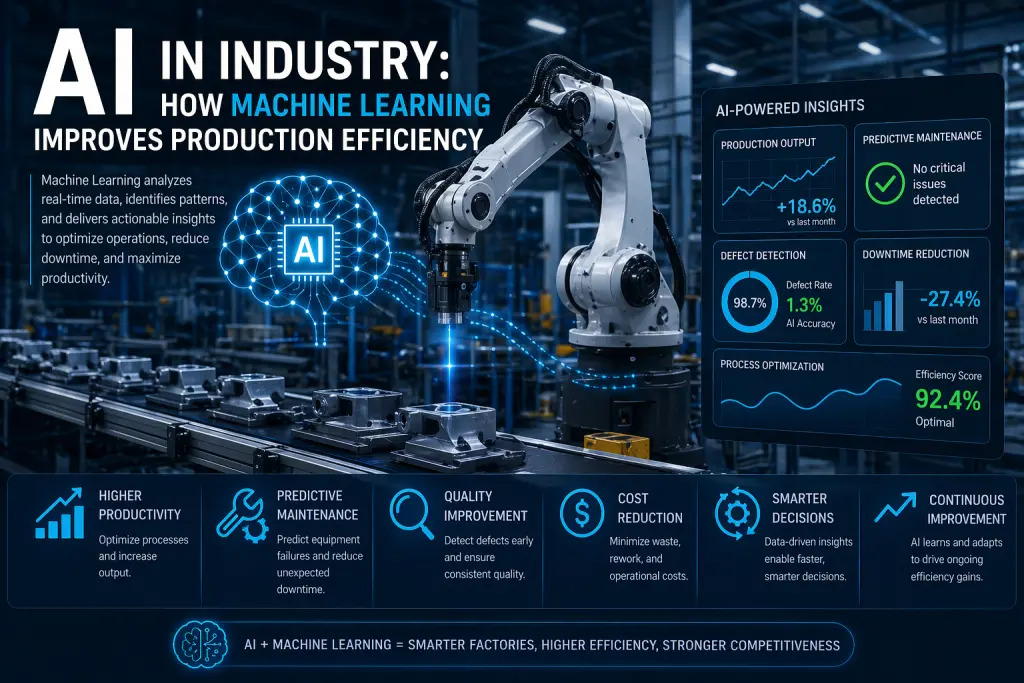
In the fast-paced world of Industry 4.0, the integration of Artificial Intelligence (AI) and Machine Learning technologies has revolutionized the manufacturing sector. These advanced technologies bring about a significant shift in how production processes are optimized and managed within industrial settings. This article will explore the various applications of Machine Learning in manufacturing, focusing on predictive maintenance, quality control, and supply chain management. Additionally, we will delve into how AI enhances decision-making processes using data analysis and algorithms to streamline operations and increase productivity.
Applications of Machine Learning in Manufacturing
Machine Learning plays a crucial role in optimizing production efficiency in the manufacturing industry. One of the key applications is predictive maintenance, where AI algorithms analyze real-time data from sensors to predict equipment failures before they occur. By implementing predictive maintenance strategies, manufacturers can reduce downtime, minimize maintenance costs, and enhance overall equipment efficiency.
Quality control is another area where Machine Learning excels. Through the use of computer vision and pattern recognition algorithms, manufacturers can identify defects in products with high accuracy and speed. This not only ensures product quality but also helps in identifying potential issues early in the production process, thereby improving overall quality assurance.
Supply chain management is greatly enhanced by Machine Learning algorithms that optimize inventory levels, forecast demand accurately, and improve logistics efficiency. By analyzing vast amounts of data, AI can provide valuable insights to manufacturers, enabling them to make informed decisions that drive efficiency and cost reduction across the supply chain.
Enhanced Decision-Making with AI
Artificial Intelligence empowers industrial decision-makers with advanced data analysis capabilities and intelligent algorithms. By leveraging AI-driven solutions, companies can make informed decisions based on data-driven insights rather than relying solely on intuition. This leads to more efficient operations, improved resource allocation, and better strategic planning within manufacturing environments.
The integration of AI in decision-making processes enables real-time monitoring of key performance indicators, trend analysis, and predictive modeling. This proactive approach helps in identifying bottlenecks, optimizing production schedules, and ultimately increasing overall productivity. Furthermore, AI algorithms can continuously learn from new data inputs, leading to continuous improvement in decision-making processes over time.
Overall, AI-driven decision-making not only streamlines operations within the manufacturing industry but also fosters innovation and competitiveness. By harnessing the power of AI and Machine Learning, companies can navigate complex operational challenges with agility and precision, positioning themselves for long-term success in the ever-evolving landscape of industrial automation.
In conclusion, the integration of Machine Learning and Artificial Intelligence in the manufacturing sector offers a plethora of opportunities to enhance production efficiency, optimize processes, and drive innovation. From predictive maintenance to quality control and supply chain management, AI technologies pave the way for a more connected, data-driven, and efficient industrial ecosystem. As companies continue to embrace AI-driven solutions, the future of manufacturing looks increasingly promising, with increased efficiency, reduced costs, and improved decision-making capabilities.
How does Machine Learning benefit predictive maintenance in manufacturing?
Machine Learning enables predictive maintenance by analyzing real-time data from sensors to predict equipment failures before they occur. This proactive approach minimizes downtime, reduces maintenance costs, and enhances equipment efficiency within manufacturing facilities.
What role does AI play in enhancing decision-making processes in the manufacturing industry?
AI empowers decision-makers by providing advanced data analysis capabilities, trend analysis, and predictive modeling. By leveraging AI-driven solutions, companies can make informed decisions based on data-driven insights, leading to more efficient operations, resource optimization, and strategic planning.